Kattegat Coastal Fog
This is the defining operational challenge at Aarhus Airport. The Djursland peninsula extends into the Kattegat strait — a body of water between Denmark's eastern coast and Sweden. The peninsula is surrounded by sea on three sides: the Kattegat to the east, the Bay of Aarhus to the south, and inlets to the north.
This maritime exposure creates ideal conditions for advection fog — warm, moist air flowing from the relatively warm Kattegat over the cooler land surface of Djursland. The effect is most pronounced from September through February, when sea surface temperatures remain warmer than land temperatures, and from March through May during certain wind patterns.
The fog at Aarhus is distinctive because of its persistence. Unlike radiation fog, which typically burns off by mid-morning as the sun heats the ground, advection fog can last for days if the maritime wind pattern holds steady. The airport has Cat I ILS capability, which requires a minimum visibility of approximately 550 metres. When Kattegat fog drops below this threshold — which happens regularly during fog season — all landings are suspended.
Claim impact: Airlines operating scheduled services to Aarhus know that Kattegat fog is a seasonal reality. If a carrier chooses to operate from AAR without Cat II-capable aircraft (which can land in lower visibility), that is an airline resource decision, not an extraordinary weather event. Similarly, if the fog clears by noon but the airline does not operate until the evening, the extended delay is within its control. We build every Aarhus fog claim on precise hourly visibility data from the airport's meteorological observations.
The Distance Problem: When Cancellation Meets Geography
What makes Aarhus uniquely difficult is the interaction between limited service frequency and remote location. Here is a real-world scenario:
You have a 7am SAS flight from Aarhus to Copenhagen, connecting to an 11am flight to London. At 5:30am, you arrive at the airport after a 50-minute taxi ride from your Aarhus hotel. At 6:15am, the flight is cancelled due to fog. The next SAS flight to Copenhagen is at 2pm — if it operates. You will miss your London connection either way.
Your options:
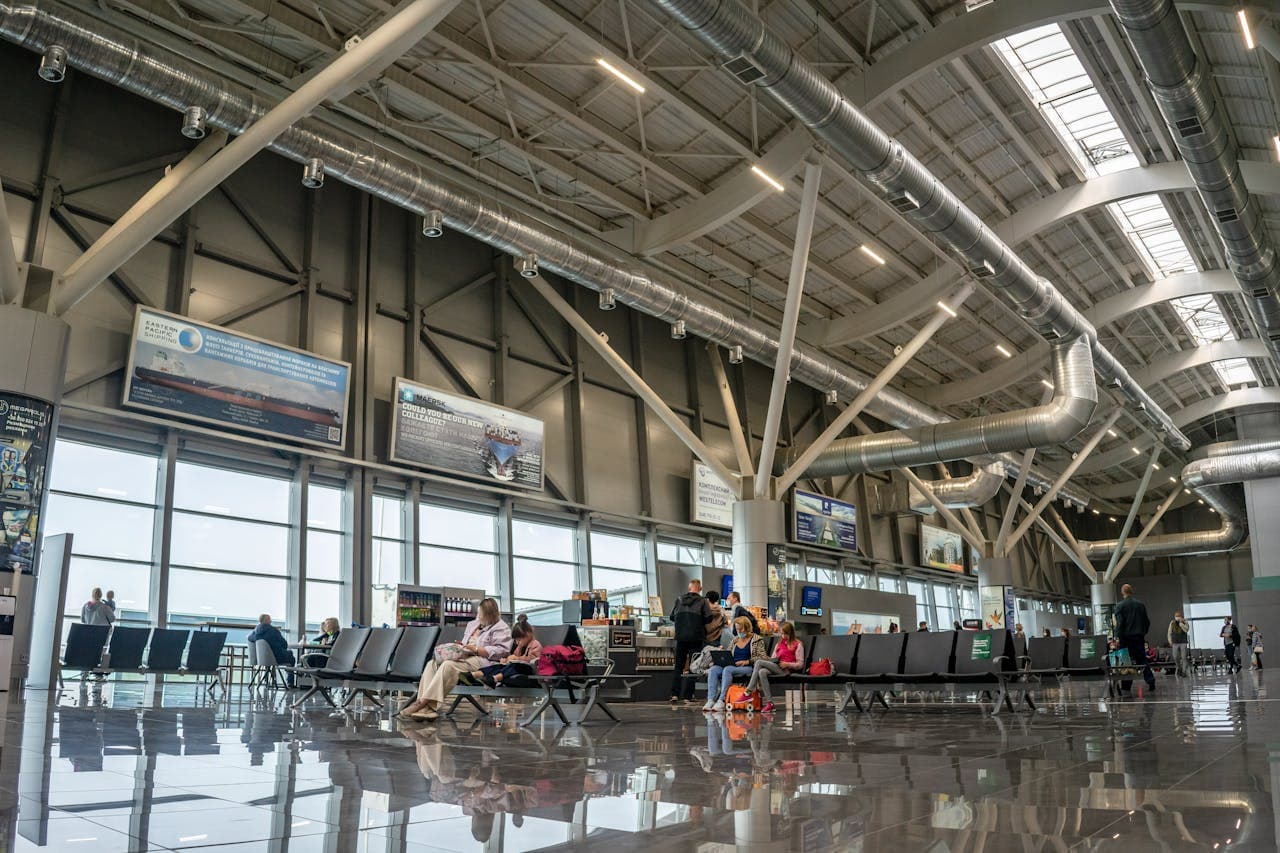
- Wait at the small Tirstrup terminal (limited food, no lounge) for the 2pm flight
- Take a taxi back to Aarhus and catch a train to Copenhagen (3.5 hours)
- Drive to Billund Airport (1.5 hours) and find an alternative connection
- Drive directly to Copenhagen Airport (3 hours)
Under EU261, the airline must offer you re-routing by the "earliest possible means." At Aarhus, this rarely means another flight from AAR. It often means ground transport to another airport — and the airline must pay for it.
Claim impact: The distance between Aarhus and its airport, combined with limited flight options, makes cancellations here disproportionately costly and disruptive. Airlines choosing to operate from this remote airport accept these constraints. The inability to offer timely re-routing strengthens your compensation claim.
Wind Shear on the Djursland Approach
The Djursland coastline creates localised wind shear effects on the final approach to Runway 10/28. As air flows over the irregular coastline — alternating between sea and land surfaces — it creates turbulent eddies at low altitude that can make the final approach unstable. Pilots may execute go-arounds (missed approaches), and in persistent wind shear conditions, the airport may temporarily suspend operations.
Claim impact: Wind shear at Aarhus is a known feature of the approach, documented in the airport's instrument approach procedures. Airlines are expected to account for this in their crew training and scheduling. Only genuinely abnormal wind shear events — well beyond published parameters — would qualify as extraordinary.
Limited Slot Recovery
Aarhus handles so few daily flights that the concept of "recovery" barely applies. At Copenhagen, if a morning disruption cancels 20 flights, the afternoon schedule absorbs many displaced passengers across dozens of alternatives. At Aarhus, if the morning flight is cancelled, there may literally be nothing until tomorrow.
This creates a perverse incentive for airlines: cancelling an Aarhus flight saves them the cost of operating it, and they know passengers will often find their own way to Copenhagen rather than wait. This does not reduce the airline's obligations — it increases them.
Claim impact: Airlines cannot benefit from their own thin schedule. The obligation to re-route you by the "earliest possible means" includes flights from other airports, ground transport, or any reasonable alternative. If the airline simply cancelled your flight and told you to rebook, that is a clear EU261 violation.