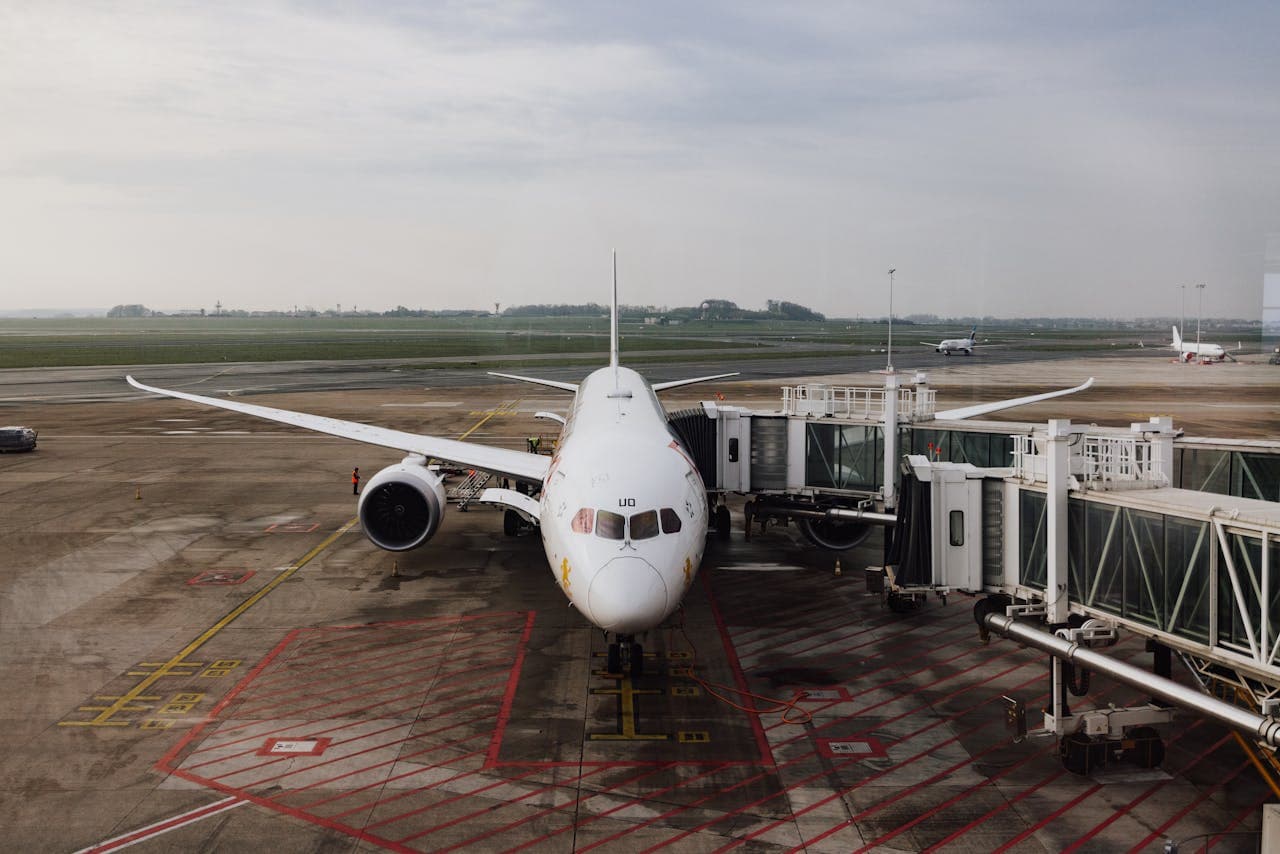
Flight disrupted at Debrecen Airport? With only a handful of weekly flights, extreme Great Plain weather, and Wizz Air as the sole carrier, a single cancellation can strand you for days. Claim up to €600.
Key Takeaways
Hungary is an EU member — EU261 fully protects every passenger departing Debrecen Airport, regardless of airline
With Wizz Air as essentially the sole scheduled carrier and only a few weekly flights, a single cancellation can leave you stranded for 3+ days or facing a 230km drive to Budapest
The Great Hungarian Plain (Alföld) produces extreme weather: summer hailstorms, winter blizzards, and dense morning fog that regularly disrupt Debrecen's limited schedule
You have 5 years under Hungarian law to file a claim — crucial when Debrecen's few flights make it easy to forget a disruption happened years ago
Airlines cannot hide behind 'limited schedule' as an excuse — if they choose to serve Debrecen, they accept the obligation to handle disruptions properly
Debrecen International Airport (DEB) is not the kind of airport most travellers think about when they consider flight compensation. Tucked away in eastern Hungary, on the western edge of the Great Hungarian Plain — the Alföld — this small regional airport serves approximately 500,000 passengers per year. It has one terminal, one runway, and essentially one airline: Wizz Air.
But what Debrecen lacks in size, it makes up for in the severity of its disruption consequences. At a major hub like Frankfurt or Amsterdam, a cancelled flight means waiting a few hours for the next one. At Debrecen, a cancelled flight can mean waiting 3 to 7 days for the next departure on the same route — or facing a 230-kilometre drive across the Hungarian countryside to Budapest's Liszt Ferenc Airport.
This is the paradox of small airport flying: the convenience of a local departure comes with the catastrophic fragility of having no backup options. And when things go wrong at Debrecen, EU261 becomes not just relevant but essential.
The Great Plain Factor: Where Geography Shapes Every Disruption
To understand flight disruptions at Debrecen, you need to understand the Alföld — the Great Hungarian Plain. This vast, flat expanse stretching from eastern Hungary into Romania and Serbia is one of Europe's most meteorologically extreme lowland regions. Without mountains, hills, or large bodies of water to moderate conditions, the Alföld experiences weather amplified by its own openness.
Summer: The Hail Zone
Between May and September, the Great Plain becomes a breeding ground for intense convective weather. The flat terrain heats rapidly under strong solar radiation, creating powerful thermal updrafts that generate cumulonimbus towers reaching 12,000 metres or higher. These storms produce not just rain and lightning, but devastating hail — some of the largest hailstones in Europe fall on the Alföld.
For Debrecen Airport, which sits directly in this hail corridor, the implications are severe. A single storm cell can produce hail that damages parked aircraft, closes the runway with accumulated ice, and creates wind shear on approach that makes landing impossible. Unlike Budapest, which sits at the western edge of the Plain and often sees storms pass to the east, Debrecen is fully exposed.
What this means for your claim: Extreme thunderstorms with large hail are genuine extraordinary circumstances. But the storm season is entirely predictable. Airlines that schedule afternoon departures from Debrecen in July and August — the peak hail months — without building in schedule flexibility are making a commercial choice, not facing an unforeseeable event. If your flight was cancelled "due to weather" but the storm had passed hours earlier and the real issue was aircraft availability or crew positioning, your claim is strong.
Winter: Blizzards on the Open Plain
The Alföld's winter personality is equally dramatic. Continental cold fronts sweeping in from the northeast bring heavy snowfall, sustained winds of 60–80 km/h, and temperatures plunging below -15°C. The flat terrain offers no windbreaks — blowing snow reduces visibility to near zero and drifts accumulate across taxiways and runway surfaces within minutes of being cleared.
Debrecen Airport's de-icing and snow-clearing capabilities are limited compared to major airports. While Budapest can deploy multiple de-icing rigs and snow ploughs simultaneously, Debrecen's smaller operation means recovery from a winter weather event takes longer, often affecting an entire day's schedule.
What this means for your claim: Genuine blizzard conditions are extraordinary circumstances. But chronic winter weather — the kind that occurs 15–20 days per year on the Plain — is foreseeable. If the airline didn't have adequate de-icing fluid available, failed to pre-position winter equipment, or cancelled your flight preventatively when other airports in similar conditions remained operational, you have grounds for a claim.
Autumn and Spring: Radiation Fog
The flat agricultural land surrounding Debrecen creates ideal conditions for radiation fog. On calm, clear nights — particularly in October, November, March, and April — the ground radiates heat rapidly, cooling the air at surface level until moisture condenses into fog. By dawn, visibility can drop below 100 metres across the entire airport.
Unlike the Danube fog at Budapest, which forms in a river valley and can persist for days, Debrecen's radiation fog typically burns off by mid-morning as the sun heats the ground. But early morning flights — which budget airlines prefer for operational efficiency — are precisely the ones affected.
What this means for your claim: If your 6:30 AM Wizz Air departure was delayed until noon because of morning fog that cleared by 9 AM, the question becomes: why was the airline still not ready to depart three hours after the fog lifted? Crew rest periods, aircraft not in position, missed departure slots — these are operational issues, not weather issues.
Stranded at Debrecen Airport?
Limited flights don't limit your rights — full EU261 protection applies
No win, no fee — we handle the airline on your behalf
We specialise in small airport claims where alternatives are scarce
Debrecen Airport's dependence on Wizz Air creates a unique vulnerability for passengers. When the sole carrier has a disruption — whether weather, technical, or operational — there is no alternative airline to rebook onto. This fundamentally changes the disruption experience.
What Wizz Air's Dominance Means in Practice
At major airports, when an airline cancels a flight, EU261 requires them to rebook you on the next available flight — including on competitor airlines. At Debrecen, there are no competitor airlines on most routes. The "next available flight" is often the same Wizz Air service three, four, or seven days later.
This creates a legal obligation that Wizz Air sometimes fails to honour. Under EU261 Article 8, the airline must offer re-routing "under comparable transport conditions, at the earliest opportunity." When there are no flights from Debrecen for days, the earliest opportunity may well be a flight from Budapest — and the airline must provide or pay for transport to Budapest Airport.
What passengers often experience instead: The airline cancels the Debrecen flight, offers rebooking on the next Debrecen departure (in 4 days), and says nothing about Budapest alternatives, ground transport, or the option of a full refund with transport back to the point of origin. This is a clear violation of EU261, and it happens regularly.
The Wizz Air "Technical Fault" Pattern
Across its network, Wizz Air's ultra-lean operational model means that technical issues on aircraft — which should be resolved by standby aircraft or wet-lease replacements at major bases — become cancellations at outstations like Debrecen. There is simply no spare aircraft parked at DEB.
When an aircraft develops a technical fault before departure from Debrecen, the options are limited: fly in a replacement aircraft from Budapest (adding 1–2 hours minimum), cancel the flight entirely, or delay while maintenance is attempted with limited on-site resources.
Claim impact: Technical faults are not extraordinary circumstances under EU261 unless they are truly exceptional and undetectable through normal maintenance. Routine technical issues — hydraulic leaks, sensor malfunctions, bird strikes, tyre damage — are part of normal airline operations. If Wizz Air cancelled your Debrecen flight for a technical reason, your claim is almost certainly valid.
Compensation Amounts for Debrecen Flights
EU261 applies to every flight departing Debrecen. The compensation amounts:
Flight Distance
Typical Routes from DEB
Compensation
Under 1,500 km
Debrecen → Vienna, Milan Bergamo, Eindhoven
€250
1,500 – 3,500 km
Debrecen → London Luton, Malmö, Dortmund, Barcelona
€400
Over 3,500 km
Connecting journeys via EU hubs (one ticket)
€600
At Debrecen, the compensation amount often exceeds the original ticket price — sometimes by a factor of 5 or 10. Wizz Air sells Debrecen flights for as little as €20–40 one way. A €250 or €400 compensation payment for a cancelled €30 flight is entirely normal under EU261. The regulation is designed to compensate for the disruption to your journey, not to refund your ticket.
The 230km Problem: What To Do When You're Stuck
When a flight at Debrecen is cancelled and the next departure is days away, passengers face a uniquely Hungarian dilemma: Budapest's Liszt Ferenc Airport is 230 kilometres to the west, roughly 2.5 to 3 hours by car on the M35 and M3 motorways.
Your Options Under EU261
Wait for the next Debrecen flight — The airline must provide meals, refreshments, and hotel accommodation for the entire waiting period. This can be 3–7 days. While uncomfortable, this option preserves your strongest position for a full compensation claim.
Accept airline re-routing via Budapest — The airline should offer to transport you to Budapest Airport and rebook you on the next available flight from there. This can be by bus, taxi, or rental car, at the airline's expense. If the airline offers this, accept it — and claim compensation separately.
Request a full refund — If you no longer wish to travel, the airline must refund your full ticket price within 7 days, plus provide return transport to your original departure point if relevant.
Make your own arrangements — You can drive or take a bus to Budapest yourself, or book alternative transport. Keep all receipts. Under EU261's duty of care provisions and the principle of mitigation, you can recover reasonable expenses. However, always notify the airline in writing first.
Critical point: Many Wizz Air passengers at Debrecen are simply told "the next flight is on Thursday" and left to fend for themselves. This violates EU261. If this happened to you, document everything — the airline's failure to provide alternatives strengthens your claim for both compensation and expense recovery.
Stranded at Debrecen Airport?
Limited flights don't limit your rights — full EU261 protection applies
No win, no fee — we handle the airline on your behalf
We specialise in small airport claims where alternatives are scarce
How to Claim Compensation for Your Debrecen Flight
Filing a claim with Avioza is straightforward, even for disruptions at small airports like Debrecen.
Collect your evidence — Booking confirmation, boarding pass (or the pass you would have received), and any communication from the airline. At Debrecen, disruption communications are often verbal rather than written — if this happened, note down what you were told, by whom, and when. Screenshots of the Wizz Air app showing cancellation notifications are valuable.
Check your eligibility — Enter your flight details in our online tool. We confirm EU261 applicability (always yes for Debrecen departures), verify the disruption, and calculate your compensation.
Submit your claim — Complete the claim form. Our team handles everything from here.
We pursue the airline — We contact Wizz Air directly, presenting the legal basis for your claim with supporting evidence. If Wizz Air rejects the claim (which happens frequently with initial submissions), we escalate through the appropriate channels, including the Hungarian NKH and, where necessary, court proceedings.
You get paid — Compensation is transferred to your account, minus our success fee. If we don't win, you owe nothing.
Your Rights While Waiting at Debrecen
When your flight is disrupted at Debrecen, the airline's immediate obligations are particularly important given the airport's isolation:
Meals and refreshments — after 2 hours for short-haul flights or 3 hours for medium-haul. At Debrecen, the airport's limited food options mean the airline should provide vouchers or direct you to nearby facilities
Hotel accommodation — mandatory if you're stranded overnight, including transport. In Debrecen, hotels are available in the city centre (15 minutes by taxi), and the airline must arrange and pay for this
Two free communications — phone calls, emails, or texts to inform people of your disruption
Full information — the airline must inform you in writing of your EU261 rights at the time of the disruption. A printed notice should be provided at the gate or check-in desk
If Wizz Air fails to provide any of these, document the failure and keep all receipts for expenses you incur yourself. These are recoverable in addition to your standard compensation.
The 5-Year Window: Don't Let Old Claims Expire
Under Hungarian law, you have 5 years to file a compensation claim. This is especially relevant for Debrecen passengers because:
Debrecen flights tend to be low-cost, leisure or diaspora travel — passengers may not consider claiming at the time
The disruption may seem minor ("just a delay") until you later learn it was worth €400
With only a few flights per week, the disruption may have happened years ago during a once-per-year visit to family in Hungary
If you flew from Debrecen any time in the last 5 years and experienced a delay of 3+ hours, a cancellation, or denied boarding, you almost certainly have a valid claim. The amount doesn't decrease over time — a claim filed today for a flight disrupted 4 years ago is worth exactly the same as one filed the day after.
Why Choose Avioza for Your Debrecen Airport Claim
Small airport claims require a different approach than hub airport claims. We understand the unique dynamics at play:
Wizz Air specialists — Wizz Air is Hungary's airline, and we are deeply familiar with their claim procedures, rejection tactics, and the escalation paths that work
Small airport expertise — we know that limited flight schedules change the re-routing obligations and make airline failures more consequential
Great Plain weather knowledge — we access official OMSZ (Hungarian Meteorological Service) data to verify whether weather was genuinely extraordinary or merely seasonal
No win, no fee — at an airport with €30 tickets, paying upfront for a claim would make no sense. Our no-risk model means it always makes sense to check your eligibility
Hungarian court experience — when airlines refuse to pay, we know the Hungarian court system and can pursue your claim to judgment
Multilingual support — available in Hungarian, English, and German
Frequently Asked Questions
Does EU261 apply to flights at Debrecen Airport?
Yes, fully. Hungary is an EU member state, so EU261 applies to every flight departing Debrecen International Airport, regardless of which airline operates it. Since Wizz Air (registered in Hungary) is the dominant carrier at DEB, and Hungary's 5-year limitation period applies, passengers at Debrecen have among the strongest legal protections available anywhere in Europe. For flights arriving in Debrecen from outside the EU, coverage depends on the airline being EU-registered — but since Wizz Air operates virtually all scheduled services, this is almost always the case.
What happens when my only flight of the week from Debrecen is cancelled?
This is the critical challenge at Debrecen. Unlike major hubs where the next flight is hours away, DEB may have only 2–3 flights per week on a given route. If your flight is cancelled, the airline must either rebook you on the next available flight (which could be 3–7 days later from Debrecen) or offer alternative transport — which often means a bus or taxi to Budapest Airport, 230 km and roughly 2.5–3 hours away, for a flight from there. If neither option is acceptable, you can request a full refund. During the entire waiting period, the airline must provide meals, refreshments, and hotel accommodation. Many passengers don't know this — airlines at small airports often fail to mention these obligations.
Can the airline blame Great Plain weather to avoid paying compensation?
The Great Hungarian Plain (Alföld) around Debrecen is known for extreme weather: violent summer thunderstorms with hail, winter blizzards with drifting snow, and dense radiation fog on calm mornings. Airlines can invoke extraordinary circumstances for genuinely severe, unforeseeable weather. However, Alföld weather patterns are well-documented and seasonal. Summer storms build predictably between May and September. Winter blizzards follow known cold-front patterns. Airlines operating at Debrecen know — or should know — these conditions. If the airline failed to plan adequate buffers, didn't have de-icing equipment available in winter, or the weather cleared but the flight was still cancelled due to crew or aircraft repositioning issues, your claim remains valid.
How much compensation can I claim for a disrupted Debrecen flight?
Under EU261, compensation depends on the flight distance: €250 for flights under 1,500 km (e.g., Debrecen to Vienna, Milan Bergamo, or Eindhoven), €400 for flights between 1,500 and 3,500 km (e.g., Debrecen to London Luton, Malmö, or Dortmund — some of these cross the 1,500 km threshold), and €600 for flights over 3,500 km (rare from Debrecen, but possible via connections booked on one ticket). These amounts are per passenger. A family of four with a cancelled Debrecen to London flight could claim €1,600 total — significantly more than their original ticket cost on an ultra-low-cost carrier.
Should I just drive to Budapest Airport instead of waiting in Debrecen?
This is a common dilemma for Debrecen passengers. If your flight is cancelled or significantly delayed, you have three options under EU261: (1) wait for the next available Debrecen flight, (2) accept the airline's re-routing offer (which may include transport to Budapest), or (3) request a full refund and make your own arrangements. If you choose to drive to Budapest on your own, keep all receipts for fuel, tolls (M35 and M3 motorways), and parking. You can claim these as reasonable mitigation costs. However, always inform the airline in writing before making your own arrangements, as this strengthens your expense claim. Our advice: let the airline offer the Budapest transfer — if they refuse, their failure to provide alternatives supports both your expense claim and your compensation claim.
How long do I have to file a compensation claim for a Debrecen flight?
Under Hungarian civil law (Ptk. 6:22. §), you have 5 years from the date of the disrupted flight. Since Debrecen is in Hungary and Wizz Air is registered in Hungary, the 5-year Hungarian limitation period applies in virtually every scenario. This is particularly important at a small airport like Debrecen, where disruptions may seem minor at the time but become more significant in retrospect — especially if you later learn you were entitled to hundreds of euros in compensation. If you had a disrupted flight at Debrecen any time in the past 5 years, check your eligibility now.
Ready to Claim Your Compensation?
It takes less than 3 minutes to check. No win, no fee.
Was your flight at Lentoasema (JYV) delayed or cancelled? Under EU Regulation 261/2004, you may claim up to €600. 1. Gather documents 2. Free eligibility check
Was your flight at Lentoasema (MHQ) delayed or cancelled? Under EU Regulation 261/2004, you may claim up to €600. 1. Gather documents 2. Free eligibility check
Karpathos Island National Airport (AOK) is one of Greece's most remote and operationally challenging aviation hubs, nestled in the Dodecanese archipelago between Rhodes and Kastellorizo. Serving the windswept island of Karpathos, this small airport handles seasonal international charters, domestic connections, and increasingly unpredictable flight disruptions due to severe weather and limited operational capacity.