Flight delayed or cancelled at Budapest Airport? With 16 million passengers, Danube fog, Great Plain thunderstorms, and Wizz Air's explosive growth, BUD is a compensation hotspot. Claim up to €600.
Key Takeaways
Hungary is an EU member — EU261 applies to every flight departing Budapest, regardless of the airline's nationality
Wizz Air is registered in Hungary, meaning all Wizz Air flights worldwide (not just from Budapest) are covered by EU261
Danube fog and Great Plain thunderstorms are the top delay causes at BUD, but airlines must plan for these well-documented seasonal patterns
You have 5 years to file a compensation claim under Hungarian civil law — one of the longest windows in Europe
Budapest's rapid growth as a low-cost hub means more flights, tighter turnarounds, and more operational delays that qualify for compensation
Budapest Ferenc Liszt International Airport (BUD) is Central Europe's fastest-growing aviation hub and Hungary's sole major gateway to the world. Serving over 16 million passengers annually, this airport on the southeastern outskirts of the Hungarian capital has transformed from a modest post-communist facility into one of Europe's busiest and most dynamic airports — driven primarily by the explosive growth of its home-based carrier, Wizz Air.
But rapid growth creates friction. More flights mean tighter turnarounds, stretched ground handling resources, and crowded terminals. Add in the Danube's autumn and winter fog banks, violent summer thunderstorms that build over the Great Hungarian Plain, and the operational complexity of running one of Europe's largest low-cost bases, and you have an airport where disruptions are not the exception — they are a structural feature of the operating environment.
If your flight at Budapest Airport was delayed by more than 3 hours, cancelled without adequate notice, or you were denied boarding, you are entitled to up to €600 in compensation under EU Regulation 261/2004. As an EU member state, Hungary offers passengers some of the strongest protections in European aviation.
Why Budapest Is a Compensation Hotspot
Budapest's position in the European compensation landscape is unique for three converging reasons, each of which increases the probability that disrupted passengers have valid claims.
1. Full EU Membership Means Universal Coverage
Hungary has been an EU member since 2004. This means EU261 applies to every single flight departing Budapest Airport — whether the airline is European, Middle Eastern, Asian, or American. There is no ambiguity, no jurisdictional grey area. If your plane pushes back from a gate at BUD, you are protected.
This contrasts sharply with airports in non-EU Balkan countries (Serbia, Albania, North Macedonia), where coverage depends on the airline's registration. At Budapest, the question of coverage simply does not arise for departures.
For arriving flights, EU261 applies if the operating airline is registered in an EU member state. Since Budapest's airline mix is dominated by EU-registered carriers (Wizz Air, Ryanair, Lufthansa, easyJet, Eurowings), the vast majority of inbound passengers are covered too.
2. Wizz Air's Hungarian Registration Is a Global Game-Changer
Wizz Air, one of Europe's largest ultra-low-cost carriers, is legally registered in Hungary. This single fact has enormous implications for flight compensation across the continent and beyond.
Because EU261 applies to all flights by EU-registered airlines departing from anywhere in the world, every Wizz Air flight globally is covered — not just those from Budapest. A Wizz Air flight from Abu Dhabi, Tirana, or Skopje to any destination is an EU261-qualifying flight. Many passengers on Wizz Air flights outside the EU do not realise this.
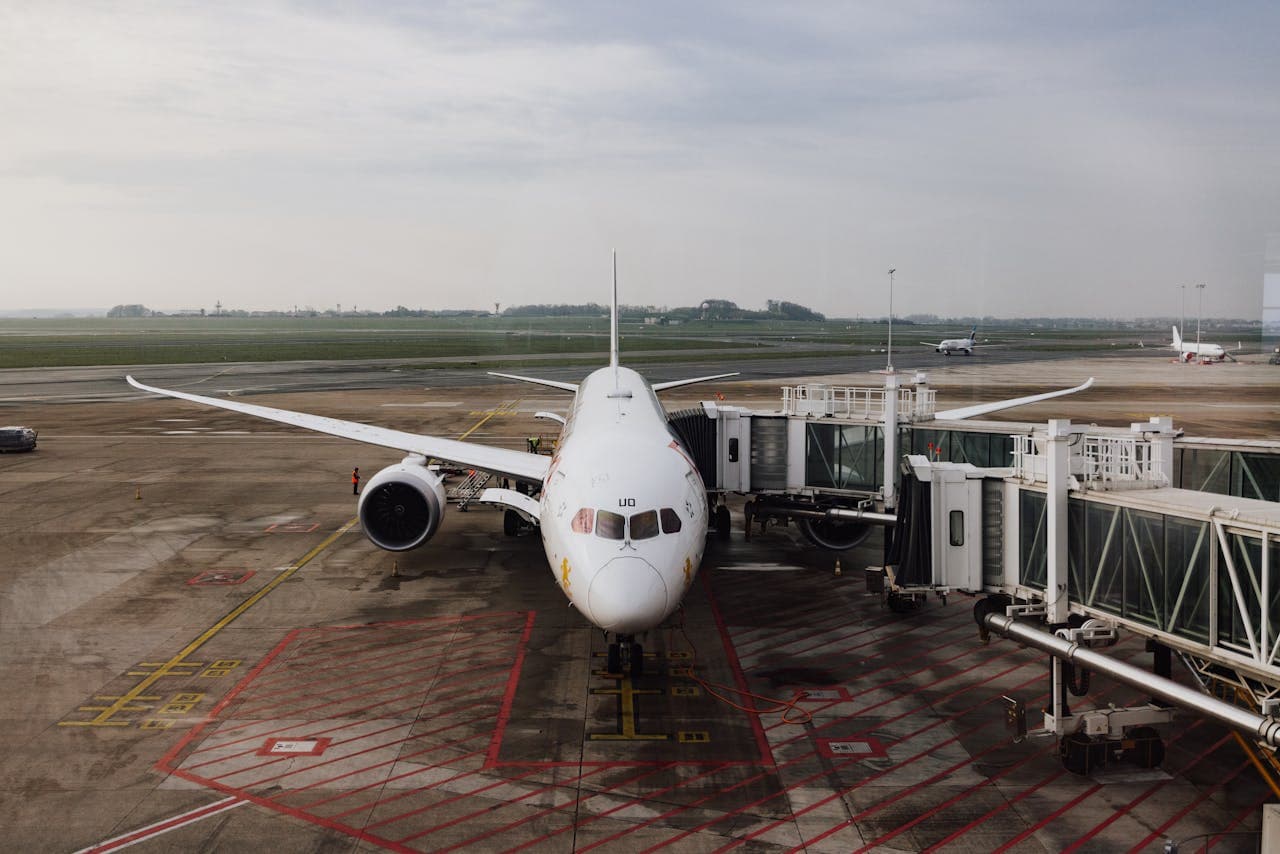
At Budapest specifically, Wizz Air operates the majority of routes and seats. Its ultra-tight turnaround model — aircraft spend as little as 25 minutes on the ground — means that even minor upstream delays cascade rapidly through the daily schedule. By late afternoon, the knock-on effects can produce 2–4 hour delays across multiple Wizz Air flights departing BUD.
Claim impact: These operational cascade delays are squarely within the airline's control. Wizz Air chose the tight turnaround model for cost efficiency. When it fails, the resulting delays are compensable under EU261.
Budapest Airport sits in a meteorological transition zone: the Danube River corridor to the west and the vast Great Hungarian Plain (Alföld) stretching to the east. This geography produces two distinct disruption seasons that affect flights with remarkable predictability.
Disrupted at Budapest Airport?
Every departing flight is EU261-protected — no exceptions
No win, no fee — we handle everything from filing to payment
The Danube River, flowing just 15 kilometres west of the airport, creates a persistent fog corridor during the colder months. When high-pressure systems settle over the Carpathian Basin, cold air pools along the river valley and spreads eastward toward the airport. The result: dense radiation fog that can reduce visibility to under 100 metres for hours or even days.
Budapest Airport has a CAT IIIB instrument landing system, which allows landings in very low visibility (down to 75 metres runway visual range). But not all aircraft and crew are certified for CAT III operations. Budget carriers, in particular, often operate aircraft certified only to CAT I or CAT II minimums, meaning they cannot land when visibility drops below 550 metres or 300 metres respectively.
What this means for your claim:
If the fog was severe enough to prevent even CAT IIIB landings, the airline has a strong extraordinary circumstance defence
If the fog was moderate (300–500m visibility) and the airline's aircraft was simply not equipped for low-visibility operations, the airline chose to operate inadequately equipped aircraft at an airport known for fog — your claim is strong
If the fog cleared hours before departure but your flight was still delayed due to knock-on effects, crew rest violations, or repositioning failures, the airline cannot invoke weather as a defence
We see airlines at Budapest routinely claim "weather" for delays that have nothing to do with the actual meteorological conditions at the time of the disrupted flight. Our team cross-references every claim against official METAR and TAF data from Budapest Airport.
Summer Thunderstorms: May Through September
The Great Hungarian Plain is one of Europe's most active convective weather regions. From late spring through early autumn, the flat terrain heats rapidly under strong solar radiation, generating powerful cumulonimbus clouds that produce lightning, heavy rain, hail, and dangerous wind shear. These storms can develop from clear skies in under an hour and persist for 2–3 hours before dissipating.
For Budapest Airport, which lies at the western edge of the Plain, these storms present a genuine operational challenge. Air traffic control imposes ground stops and holding patterns when thunderstorm cells pass directly over the airport or its approach corridors. Lightning within 5 nautical miles triggers ramp closures, halting all loading, unloading, and pushback operations.
What this means for your claim:
The storm itself is typically an extraordinary circumstance — no one disputes that a 60,000-foot cumulonimbus with hail is beyond the airline's control. But the aftermath is where claims succeed. Airlines must recover their operations reasonably quickly after a storm passes. If the storm lasted 90 minutes but your delay was 6 hours because the airline couldn't get a crew in position, didn't have a replacement aircraft available, or simply failed to manage the recovery, the delay beyond the storm's direct impact is compensable.
Budapest sees an average of 25–30 thunderstorm days per year in the peak season. Airlines operating daily schedules at BUD know this. Courts have consistently held that scheduling without adequate storm buffers during the known thunderstorm season constitutes an operational failure, not an extraordinary circumstance.
Compensation Amounts for Budapest Flights
When EU261 applies — and for departures from Budapest, it always does — the compensation amount depends on the flight distance:
Route Type
Distance
Example from BUD
Amount
Short-haul
Under 1,500 km
Budapest → Vienna, Prague, Warsaw, Zagreb
€250
Medium-haul
1,500 – 3,500 km
Budapest → London, Barcelona, Istanbul, Tel Aviv
€400
Long-haul
Over 3,500 km
Budapest → Dubai, New York (seasonal), Bangkok
€600
These amounts are per passenger, including children with their own seat. A couple delayed on a Wizz Air flight from Budapest to London Luton would claim €800 total. A family of four with a cancelled flight to Barcelona: €1,600.
Important note on Wizz Air's 50% reduction tactic: Airlines can reduce compensation by 50% if they offer re-routing that arrives within certain time windows (2, 3, or 4 hours of the original arrival, depending on distance). Wizz Air frequently offers alternative flights that arrive just within these thresholds. We check whether the offered alternative was genuinely available and whether you were clearly informed of your options.
What Causes Delays at Budapest Airport
Beyond weather, Budapest Airport experiences several categories of operational disruption that are squarely within airline control.
Turnaround Pressure
Wizz Air and Ryanair both operate aggressive turnaround models at BUD, aiming to get aircraft back in the air within 25–30 minutes of landing. This model works when everything goes perfectly. When it doesn't — a late inbound flight, a passenger requiring extra assistance, a catering delay, a ground handling equipment malfunction — the schedule shatters.
Unlike legacy carriers that build 60–90 minute buffers at hub airports, budget carriers at Budapest operate with essentially zero buffer. A 15-minute delay on an aircraft's first flight of the day compounds through four or five subsequent sectors, producing 2–4 hour delays by evening.
Claim impact: Turnaround pressure is a business model choice, not an extraordinary circumstance. These claims have a very high success rate.
Terminal Congestion
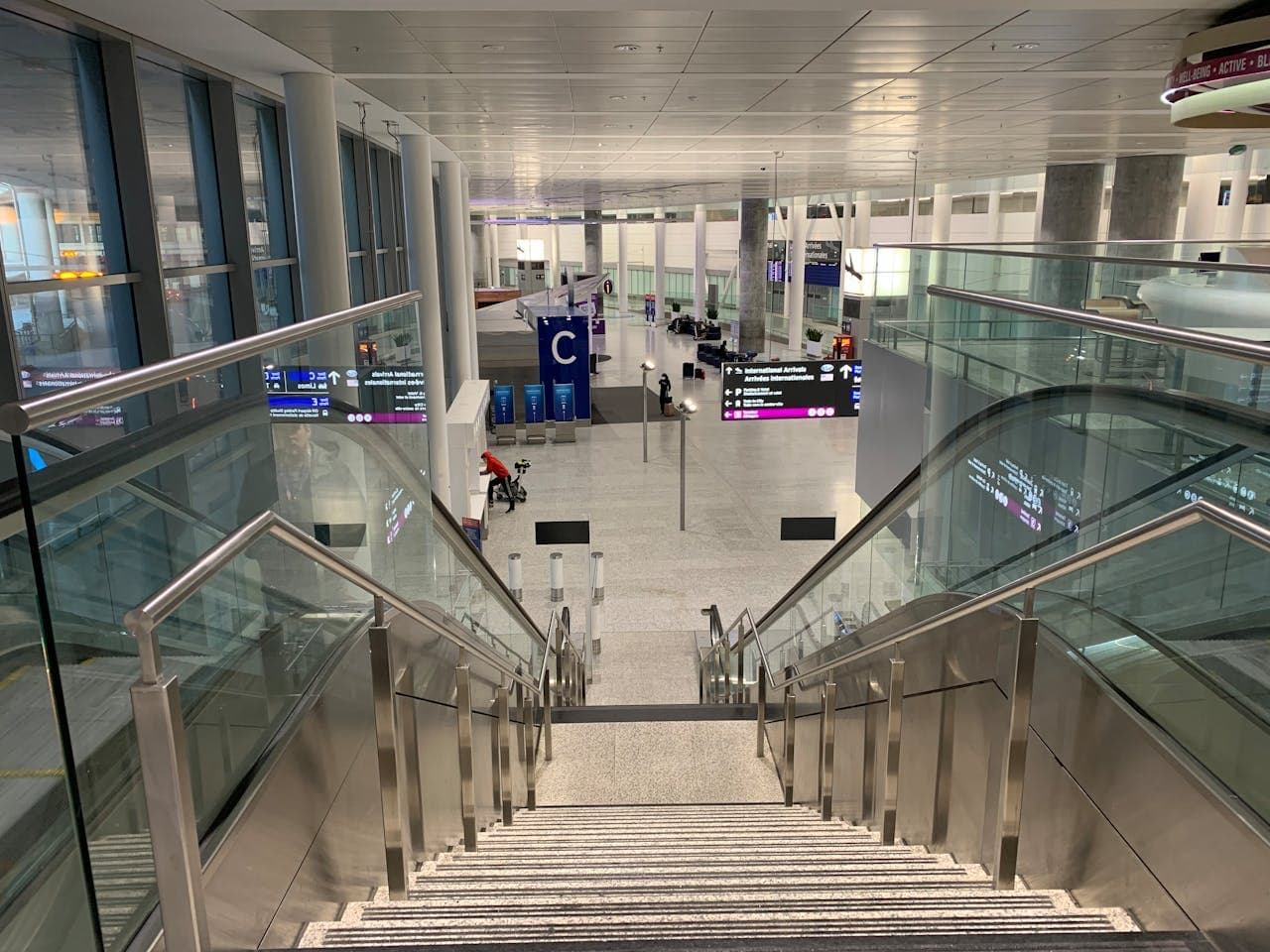
Budapest's Terminal 2 (the sole passenger terminal since Terminal 1 closed to scheduled flights) was designed for approximately 10 million annual passengers. It now handles over 16 million. The pier extensions and SkyCourt central processing area have alleviated some pressure, but security bottlenecks, gate shortages, and apron congestion during peak periods continue to cause ground delays.
Claim impact: Airport infrastructure limitations are operational factors. Airlines accept these constraints when they choose to operate from BUD. Strong claims result.
Crew Scheduling Failures
As Budapest's flight count has grown faster than airline crew bases, crew-related disruptions have increased. Pilots or cabin crew timing out on duty hours, insufficient standby crew, and delays caused by crew arriving late from earlier disrupted flights are common, particularly during the summer and December holiday peaks.
Claim impact: Crew management is entirely within the airline's control. These claims are almost always successful under EU261.
Disrupted at Budapest Airport?
Every departing flight is EU261-protected — no exceptions
No win, no fee — we handle everything from filing to payment
How to Claim Compensation for Your Budapest Flight
Filing a claim with Avioza takes less than three minutes and costs you nothing upfront.
Gather your documents — You need your booking confirmation (or e-ticket), boarding pass, and any communication from the airline about the disruption. Photographs of departure boards showing delays or cancellations are valuable additional evidence.
Check your eligibility — Use our online tool to enter your flight details. We instantly verify whether EU261 applies (for Budapest departures, it always does), check the delay duration, and calculate your compensation amount.
Submit your claim — Fill in the claim form with your personal details and flight information. Our legal team takes over from here.
We negotiate with the airline — We contact the airline directly, present the legal basis for your claim, and handle all correspondence. If the airline rejects the claim, we escalate to the Hungarian National Transport Authority (NKH) or to the appropriate national court.
You receive your money — Once the airline pays, we transfer the compensation to your account, minus our success fee. If we don't win, you pay absolutely nothing.
Your Rights While Stranded at Budapest Airport
Even before compensation enters the picture, airlines have immediate obligations when your flight is disrupted at BUD:
Meals and refreshments after 2 hours (flights under 1,500 km), 3 hours (1,500–3,500 km), or 4 hours (over 3,500 km)
Hotel accommodation if you are stranded overnight, including transport to and from the hotel
Two free communications — phone calls, emails, or text messages
Choice of re-routing or refund if your flight is cancelled — the airline must offer you an alternative flight or your money back in full
These care rights apply from the moment the delay begins, regardless of the cause. Even if the airline later proves extraordinary circumstances to avoid compensation, they must still provide care. If they don't, keep every receipt — you can claim these expenses separately.
Budapest tip: If the airline isn't providing care, the airport's passenger information desk (located in the SkyCourt area) can help you understand your rights and document the airline's failure to provide assistance.
Time Limits: The Hungarian 5-Year Advantage
Under the Hungarian Civil Code (Polgári Törvénykönyv, Section 6:22), the general limitation period for civil claims is 5 years. This applies to EU261 claims brought under Hungarian jurisdiction — which includes all flights departing Budapest and all Wizz Air flights worldwide.
This is one of the most generous time limits in Europe:
Airline Home Country
Time Limit
Common Airlines at BUD
Hungary
5 years
Wizz Air
Ireland
6 years
Ryanair
Germany
3 years
Lufthansa, Eurowings
UK
6 years
easyJet, British Airways
Netherlands
3 years
KLM, Transavia
Italy
2 years
ITA Airways
Strategic tip: If you were disrupted on a Wizz Air flight 4 years ago and never claimed, you likely still can. Many passengers discover their rights years after the event. The 5-year window under Hungarian law gives you time — but we always recommend filing as early as possible while evidence is fresh.
The NKH: Hungary's Enforcement Body
The Nemzeti Közlekedési Hatóság (National Transport Authority) is the Hungarian body responsible for enforcing EU261. While the NKH can investigate airline non-compliance and impose fines, it cannot directly award compensation to individual passengers. For individual claims, the path is through the airline, then through court if necessary.
In practice, the NKH's involvement often accelerates the process. Airlines know that an NKH investigation can result in regulatory consequences beyond the individual claim. When we escalate a case to the NKH, airlines tend to settle more quickly.
Disrupted at Budapest Airport?
Every departing flight is EU261-protected — no exceptions
No win, no fee — we handle everything from filing to payment
Budapest Airport's compensation landscape has specific characteristics that require expertise:
We understand Wizz Air's tactics — as the airline's home market, we have deep experience with Wizz Air's claim process, common rejection strategies, and escalation paths. Wizz Air routinely rejects valid claims citing "extraordinary circumstances" for events that are clearly operational
Hungarian legal expertise — we know the Hungarian court system, the NKH procedures, and the specific case law from Hungarian courts that strengthens your claim
Meteorological verification — we cross-reference every weather-related claim against official Budapest METAR data, not the airline's own characterisation of conditions
No win, no fee — zero financial risk to you. We charge only when we successfully recover your compensation
Multilingual support — our team assists passengers in Hungarian, English, and German, covering the three main language groups that pass through BUD
Fast processing — most Budapest claims are resolved within 8–12 weeks, though complex cases involving court proceedings may take longer
Frequently Asked Questions
Does EU261 apply to all flights at Budapest Airport?
EU261 applies to every flight departing Budapest Ferenc Liszt International Airport, regardless of the airline. This means whether you fly Wizz Air, Ryanair, Turkish Airlines, Emirates, or any other carrier, you are protected. For flights arriving in Budapest from outside the EU, EU261 only applies if the operating airline is EU-registered. Since Hungary is a full EU member state, Budapest Airport offers some of the broadest passenger protections available at any European hub.
My Wizz Air flight from Budapest was delayed — how much can I claim?
Wizz Air is registered in Hungary, so EU261 covers all Wizz Air flights globally. For delays of 3+ hours at your final destination, you can claim: €250 for flights under 1,500 km (e.g., Budapest to Vienna, Prague, or Zagreb), €400 for flights between 1,500 and 3,500 km (e.g., Budapest to London, Barcelona, or Tel Aviv), and €600 for flights over 3,500 km (e.g., Budapest to Dubai or Abu Dhabi via Wizz Air Abu Dhabi). These amounts are per passenger — a family of four delayed on a Budapest to London flight would receive €1,600 total.
Can the airline refuse compensation because of Danube fog at Budapest Airport?
Airlines frequently cite fog as an extraordinary circumstance to avoid paying compensation. However, Danube fog is a well-documented seasonal phenomenon at Budapest Airport, occurring most frequently from October through February when cold air settles over the river corridor. Courts have increasingly ruled that airlines operating regularly at BUD must account for predictable fog in their scheduling. If the fog was moderate, cleared before your flight's scheduled departure, or the delay was disproportionate to the actual weather event, your claim has strong grounds. We verify every case against official meteorological data from the Hungarian Meteorological Service.
How long do I have to claim compensation for a Budapest flight?
Under Hungarian civil law (Ptk. Section 6:22), you have 5 years from the date of the disrupted flight to file a compensation claim. This is one of the longest limitation periods in Europe. For Wizz Air (registered in Hungary), the 5-year Hungarian limit always applies. For airlines registered in other countries, the time limit of the airline's home country may apply instead: Germany 3 years, UK 6 years, Ireland 6 years, Italy 2 years. However, since all departing flights from Budapest fall under Hungarian jurisdiction, the 5-year period is often applicable regardless.
What happens during a summer thunderstorm delay at Budapest Airport?
Budapest sits on the edge of the Great Hungarian Plain (Alföld), which generates some of Europe's most intense convective thunderstorms between May and September. These storms can produce lightning, hail, and wind shear that genuinely grounds flights. During a storm, the airline must provide care: meals after 2 hours, hotel accommodation for overnight delays, and two free communications. For compensation, the key question is whether the airline's response was proportionate. If the storm lasted 45 minutes but your delay was 5 hours due to knock-on crew issues or scheduling failures, you likely have a valid claim. Storms are extraordinary; poor recovery planning is not.
I was denied boarding on an overbooked flight from Budapest — what are my rights?
Denied boarding due to overbooking entitles you to immediate compensation under EU261: €250 (under 1,500 km), €400 (1,500–3,500 km), or €600 (over 3,500 km). This applies even if the airline asks for volunteers first. If you are involuntarily denied boarding, the airline must also offer you the choice between re-routing to your destination or a full refund. With Budapest's growing passenger numbers and Wizz Air's high load factors, overbooking incidents are becoming more common. Unlike weather delays, airlines cannot invoke extraordinary circumstances for overbooking — it is entirely within their control.
Ready to Claim Your Compensation?
It takes less than 3 minutes to check. No win, no fee.
Was your flight at Lentoasema (JYV) delayed or cancelled? Under EU Regulation 261/2004, you may claim up to €600. 1. Gather documents 2. Free eligibility check
Was your flight at Lentoasema (MHQ) delayed or cancelled? Under EU Regulation 261/2004, you may claim up to €600. 1. Gather documents 2. Free eligibility check
Karpathos Island National Airport (AOK) is one of Greece's most remote and operationally challenging aviation hubs, nestled in the Dodecanese archipelago between Rhodes and Kastellorizo. Serving the windswept island of Karpathos, this small airport handles seasonal international charters, domestic connections, and increasingly unpredictable flight disruptions due to severe weather and limited operational capacity.